
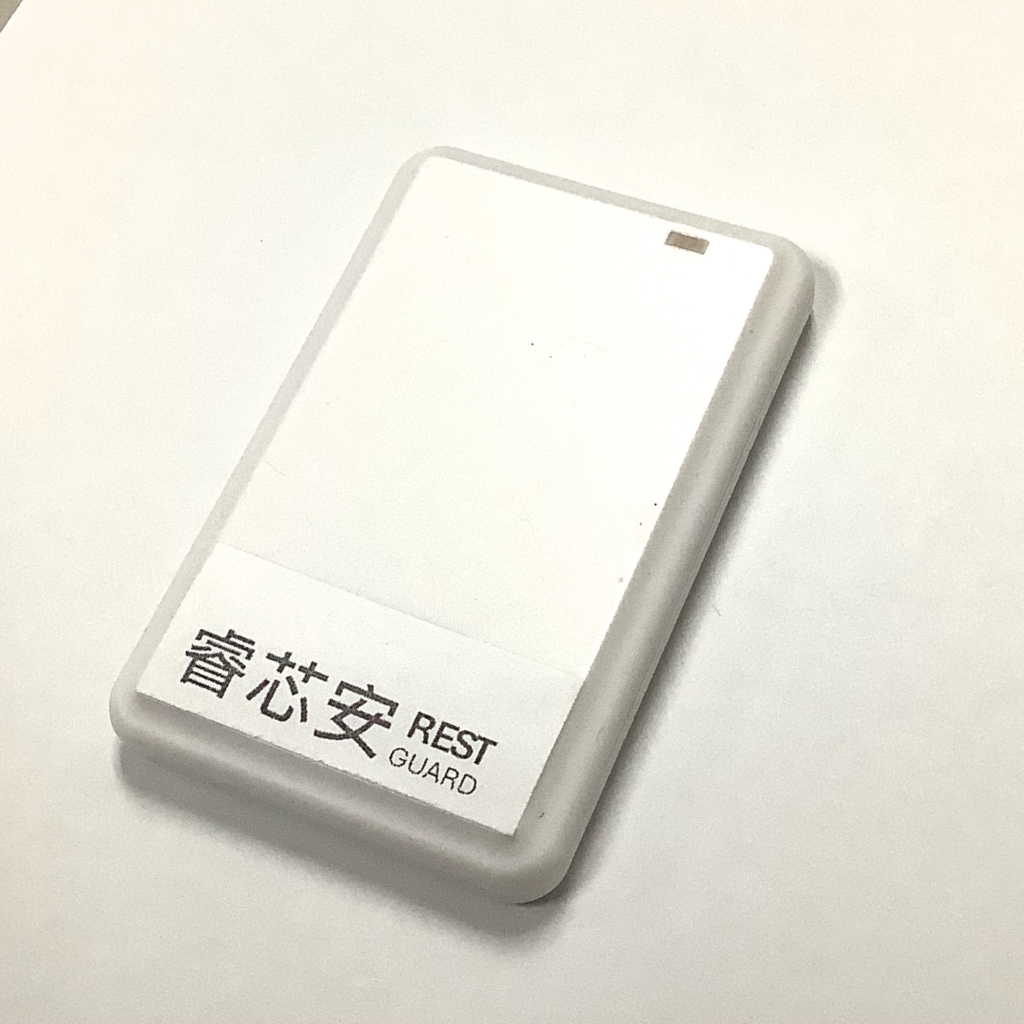
Specializing in advanced motion sensing and electronics design, WUSA applies proven sensing algorithms, machine training for AI, as well as IoT technologies to healthcare. Simply place Rest Guard under your pillow while sleeping, it captures your heartbeat signals for AI analysis and feedback you if you are under cardiovascular disease risk. POC done with hospital equipment, and AI model is verified with open-source data.
We partner with hospitals and deploy Rest Guard in hospitals and nursing homes to reduce nursing resources needed for monitoring heart rate and respiration. Nursing home clients receive early warnings of cardiovascular risk and are transferred to hospitals for timely treatment before medical certification is finalized. Once certification is approved, doctors can release treatment accordingly. Nursing homes enhance service quality with proactive monitoring, while hospitals gain early access to potential patients. This creates a win‑win model: improved care for residents, efficiency for nursing staff, and new patient inflows for hospitals—all while building Rest Guard’s credibility and market traction.
Classify cardiovascular patients as well as advise and assist in collecting physiological data.
•No personnel operation required; the device is no contact with subjects.
•The sensor collects heartbeat and respiratory waveforms.
•Rest Guard records complete heartbeat waveforms and respiration waveforms.
•Regular wearables only calculate heart rate and respiration rate.
•Place Rest Guard in assigned area on bed; no need to contact with subjects.
•Provide Wi-Fi hotspot for automatic upload of signals to database.
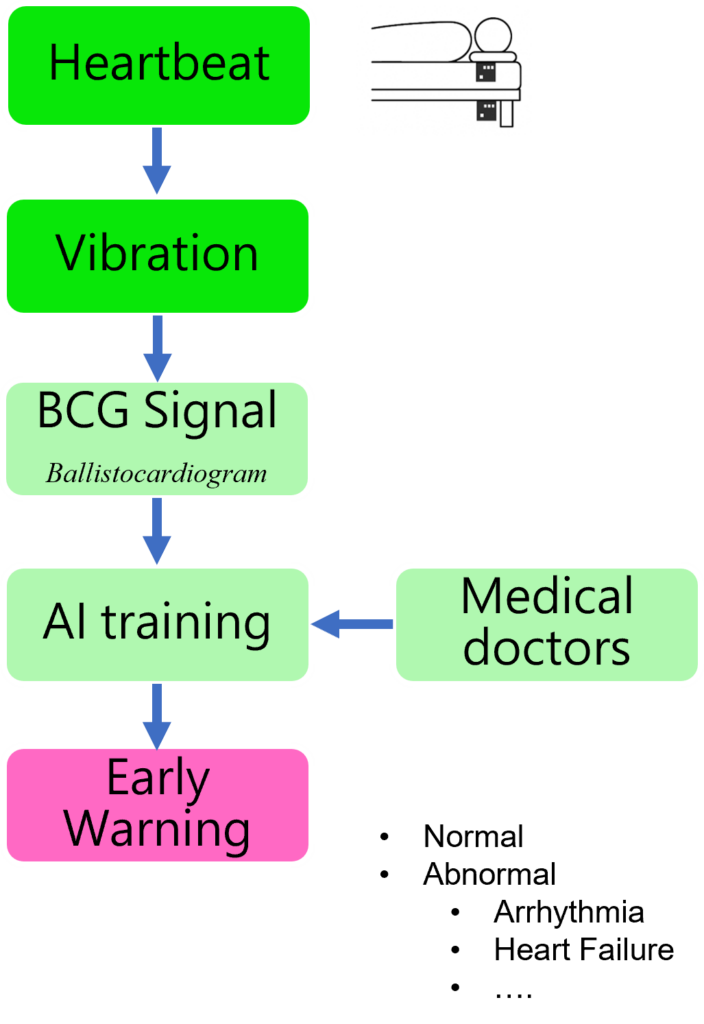
Classified data is used for AI modeling. Realtime applying data will be machine-interpreted to estimate disease risk in percentage and enabling early warning before onset accordingly.
•Based on 2016 NIH-sponsored paper by Kim et al., establishing mechanical model of heartbeat. Rest Guard digitizes the force of cardiac contraction during each cycle.
•Any issues related to cardiac contraction and ejection can be observed in waveforms, such as arrhythmia, heart failure, etc. These data are used for machine learning training.
•Nursing station displays patient status such as in bed or out of bed; awake or asleep; heart rhythm and respiration data.
•Analyzes sleep quality and detects sleep apnea symptoms.
•It’s a home physiological monitoring with AI interpretation. Data can be transmitted to hospitals.
•Offering a long-term unobtrusive monitoring during sleep to identify individuals at risk of cardiovascular disease.
•When probability of disease indicators rises, users are reminded to seek medical care.
•Data will be provided to physicians for reference. It achieves an ecosystem or early warning before disease onset.